UNESCO lists Korean mountain Buddhist temples as World Heritage sites
READ MORE
Seven ancient Korean towering temples, that personify a approach Buddhism in a nation has joined with Indigenous beliefs and styles, were listed as UNESCO universe birthright sites on Saturday.
The 7 towering temples – Seonamsa, Daeheungsa, Beopjusa, Magoksa, Tongdosa, Bongjeongsa, Buseoksa – were all determined during a Three Kingdoms duration that lasted until a 7th century AD.
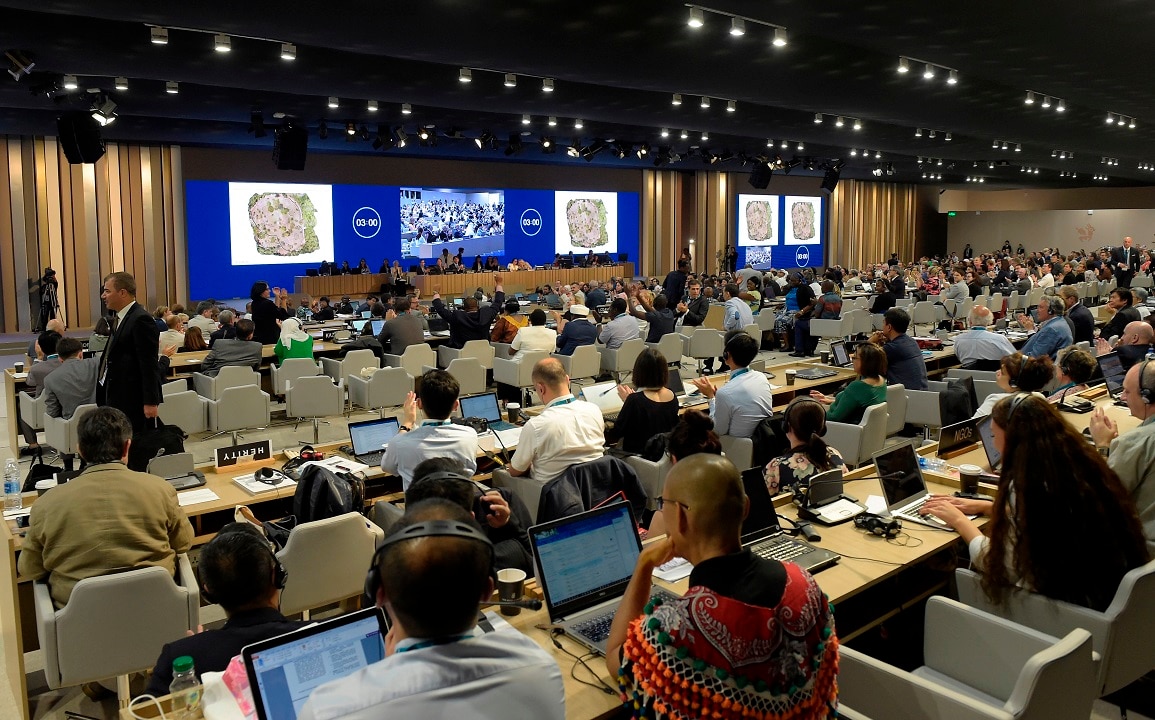
UNESCO done a proclamation during a assembly in a Bahraini collateral Manama.
Buddhism was alien to a Korean peninsula in a fourth century and supposed by the ancient kingdoms of Goguryeo, Baekje and Silla, substantiating it as a inhabitant sacrament for some-more than 1,000 years.
During a religion’s heyday in a fifth and sixth centuries many houses of ceremony were built underneath clever state patronage, accelerating a importation of Buddhist culture, design and style.
Over time elements of normal Korean beliefs joined into a religion, combining a Tong Buddhist doctrine, definition converging or integration, and church architectural layouts followed suit.
Buildings were assembled in presumably portentous locations and many temples set adult in hilly areas, in line with a normal Korean bend for plateau and a Zen concentration on imagining in a ease environment.

Temples were built on high positions stable by hills and autocratic an open perspective over other mountains.
A standard towering church has a prolonged circuitous opening trail adult a slope, buildings laid out in a block with an center yard in a middle.
The many critical gymnasium is on a top turn during a back, and halls for meditation, bland vital areas for monks, and a pavilion form a other 3 sides.
But Buddhism’s change began to decline after a Chosun dynasty, that took over in a 14th century, adopted Confucianism as a beliefs and launched an endless and fast crackdown on a religion.
It forced many civic temples to close, withdrawal usually those in remote hills to survive.
Article source: http://watoday.com.au/comment/obituaries/indian-pauper-and-king-were-the-same-bloke-20160115-gm750c.html


Comments
Post a Comment